English
 Deutsch
A signature proves somebody was there, not what they received
Every handover moves liability. Most are documented by a signature that proves attendance and nothing else. The three handovers in a typical shipment, and what each one needs.
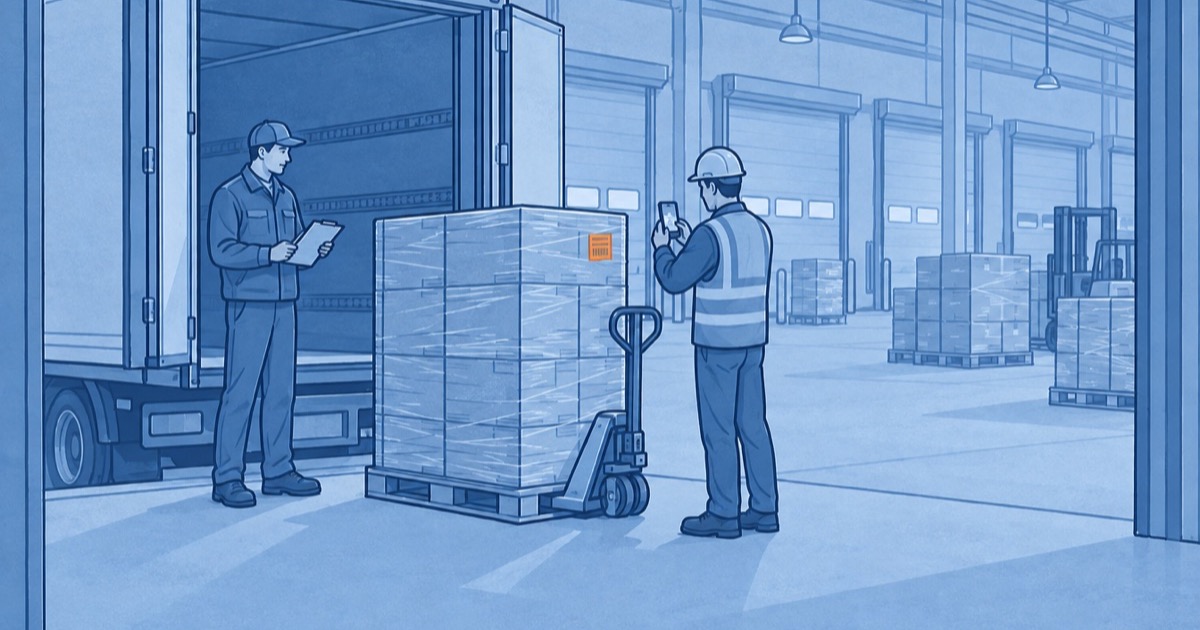
Ask a warehouse team how they document a handover and most will point at the delivery note, signed, dated and filed. Ask what the signature establishes and the answer gets vaguer, because all it shows is that a person was present and made a mark.
It does not establish that the pallet was intact. It says nothing about the count. In most cases the person signing has not opened anything, and both parties know it.
In short
- A signed delivery note shows that someone was present and accepted the consignment. It says almost nothing about the condition of the goods.
- Carrier liability covers a window of custody: under the Carmack Amendment from receipt to delivery, and under CMR Article 17 from taking over the goods to delivery. Under Carmack a shipper makes its case by showing delivery in good condition, arrival in damaged condition and the amount of damages, and the carrier then has to prove it was not at fault (Missouri Pacific Railroad Co. v. Elmore & Stahl, 1964).
- A shipment through a forwarder passes through at least three custody transfers, and the intermediate ones at hubs, cross-docks and vehicle changes are rarely documented.
- A defensible handover record shows four things at each boundary you control: the identifiable unit, the load in position, any securing, and the closure or seal. That is five to eight photographs a load.
Liability covers a window of custody
Carriage law frames the problem usefully, and it does so the same way on both sides of the Atlantic.
In the United States the Carmack Amendment makes a carrier liable for the actual loss or injury to property it receives for transportation (49 U.S.C. § 14706(a), read 9 September 2026). To recover, a claimant has to establish three things, and the Supreme Court set them out in Missouri Pacific Railroad Co. v. Elmore & Stahl, 377 U.S. 134 (1964): delivery to the carrier in good condition, arrival in damaged or deficient condition, and the amount of damages.
The rule covers a window with two ends, from the moment the carrier takes the goods over until it hands them across, and the carrier's whole exposure sits inside it. That is why the first element is about origin and the second about destination: at both ends the question is who had the goods.
International road carriage puts it more plainly still. Under CMR the carrier is liable for total or partial loss and for damage occurring between the time it takes over the goods and the time of delivery (CMR Convention, Article 17, read 9 September 2026).
So every dispute about damage is really a dispute about which side of a boundary it happened on. A boundary is only as clear as its documentation.
There is a second layer worth knowing, and it is where the money goes. Compensation for international road carriage is capped at 8.33 units of account per kilogram of gross weight short, the unit being the IMF Special Drawing Right (Protocol to the CMR Convention, Geneva, 5 July 1978, UN Treaty Series vol. 1208, read 9 September 2026). US domestic freight has no statutory cap, but § 14706(c) lets a carrier limit its liability by written agreement, and LTL tariffs do so routinely by commodity.
Work through what that means for a light, valuable consignment. A pallet of electronic instruments weighing four hundred kilograms carries a CMR ceiling of roughly 3,332 units of account regardless of what is inside it. If the goods are worth forty thousand, the ceiling is the whole argument. Getting past it means attacking the carrier's conduct or the limitation itself, and both are evidential questions about how the goods were handled. That is exactly what nobody has a record of.
The three handovers nobody counts
A supplier delivering through a forwarder calls it one delivery, but there are at least three transfers of custody in it, and each one is a separate boundary.
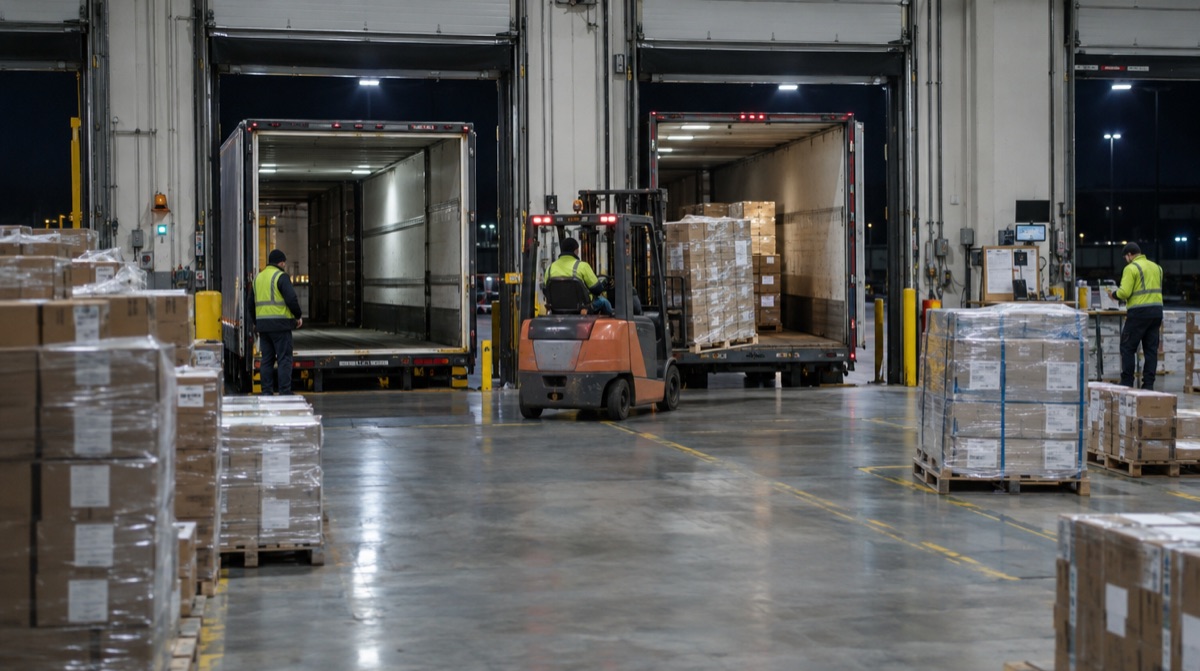
- The first handover is at your own dock, when the goods pass from your control to the carrier. This is the one you have most control over and the one most likely to be undocumented beyond a signature, because your team is busy and the driver is waiting.
- The second happens at any intermediate point: a cross-dock, a groupage hub, a change of vehicle. On a groupage movement this may happen more than once. Nobody photographs anything at these points, and they are where a great deal of damage originates, because the goods are handled by parties who never saw them loaded and will never see them delivered.
- The third is at the consignee's dock, and it is the only one that anyone routinely documents, usually with a signature and occasionally with a photograph taken after the damage was found.
The gap should be obvious by now. Documentation exists at the point where the argument surfaces, and not at the points where the argument could be settled.
The party best placed to document is the one least motivated to
Underneath the whole problem sits an awkward fact.
At the first handover, you have the goods, the time and the equipment. You also have no immediate incentive, because nothing has gone wrong and the driver is waiting. At the second handover, the party doing the handling has the least stake in the outcome of any dispute and the least knowledge of what the goods should look like. At the third, the party with every incentive to document is the consignee, who by then is documenting damage rather than condition.
So the record gets made by the least motivated party at the least useful moments. Any fix has to start by accepting that the documentation burden falls, unfairly, on whoever loses if it does not exist.
For a manufacturer that is you at dispatch. For an intermediary it is at every point where you take custody, and there is a specifically intermediary-shaped reason to care.
US law draws a hard line between two roles that sound alike in conversation. A broker sells, negotiates for or arranges transportation by motor carrier for compensation. A freight forwarder holds itself out to provide transportation, assembles and consolidates shipments, performs break-bulk and distribution, and, in the words of the definition, assumes responsibility for the transportation from the place of receipt to the place of destination (49 U.S.C. § 13102(2) and (8), read 9 September 2026).
Read those two together. The consolidation that makes a groupage operation economic is the same activity that moves you from arranging to carrying, and with it comes carrier liability for the whole journey. A great many operations describe themselves as brokers in their contracts and behave as forwarders on their docks. The distinction that feels protective on paper does not survive the way the work is actually done, and courts look at conduct.
What a defensible handover record contains
Less than most teams expect: four things, at each boundary you control.
- The unit, whole and identifiable: the pallet or the piece, photographed so the identifier is readable and the general condition is visible. This is the baseline that everything later is compared against.
- The load in position: for a full load, the trailer photographed from the doors before closing. For part loads, the goods in position relative to other freight. This answers questions about stowage, sequence and what else was travelling.
- Any securing: straps, bracing, edge protection, dunnage. Photographed in place. This matters more than people expect, because securing is where a conduct argument under CMR Article 29 usually lives.
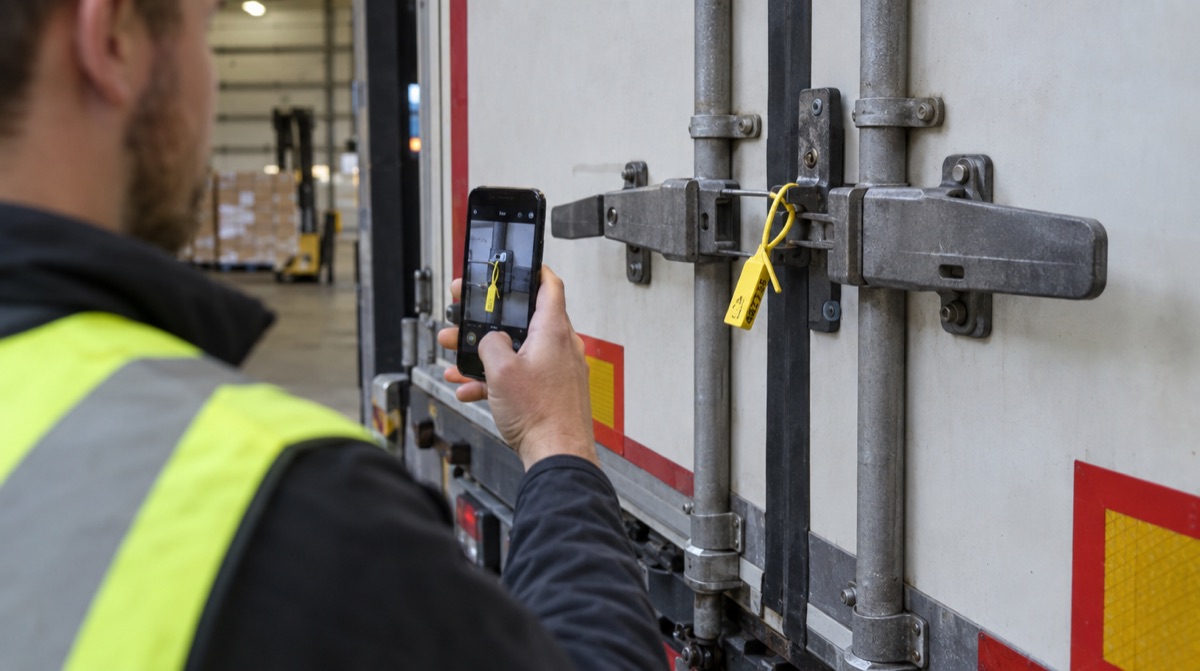
- The closure: the seal with its number readable, or the doors closed, or the driver's signature with the goods visible in the same sequence of images.
That comes to five to eight photographs a load. The harder part is doing it every time, because a record covering some loads and not others invites the question of why this one and not that one.
Making the handover mutual
There is a version of this that costs nothing extra and is worth more: give the other party the record at the moment of handover.
A driver who leaves with a link to eight photographs of the load they just accepted is in a different position from one who leaves with a signature. So are you. The record stops being your evidence against them and becomes a shared account of a moment both parties witnessed, which is much harder to dispute later and considerably faster to resolve.
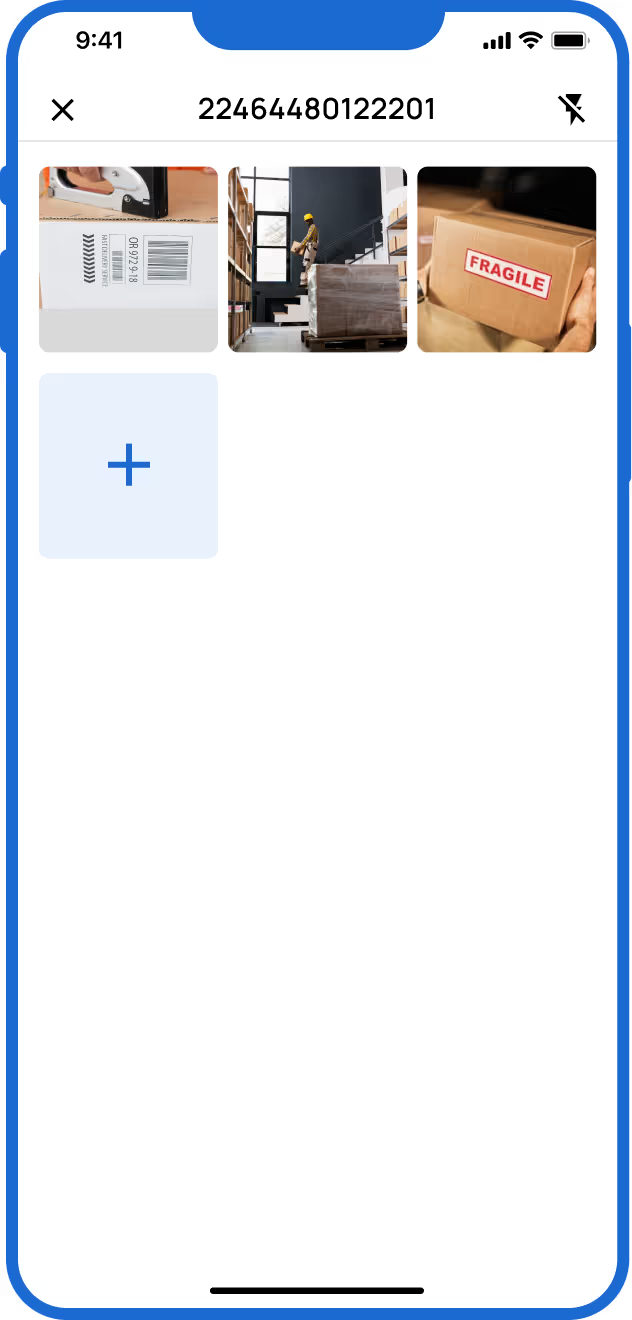
This is the mechanism Blimp is built around rather than a benefit it claims. Photographs are attached to a shipment reference at capture, so a photo report can be generated and shared against a delivery note number in under a minute, at the dock, while the vehicle is still there. Capture runs on a shared device with PIN access rather than personal accounts, because a handover record on a supervisor's phone is not an operational record. It works offline, since dock doors are where reception ends, and syncs when the device finds signal. The capture and retrieval flow is designed so the person doing it does not have to think about filing.
Blimp does not capture a signature, does not manage proof of delivery workflows, and does not integrate with a telematics or ePOD system to timestamp arrival against a geofence. It documents condition, so if what you need is signature capture and delivery confirmation, you want a different kind of product.
What this will cost you
The first objection you will hear from the floor is that handover records slow loading, and it is true. Photos taken after the goods have left prove nothing, so every truck carries a small extra step at the dock.
That step usually lands when a driver is watching the clock and the shift is already late, and on a busy outbound dock it adds up over a day. The sites where the habit sticks are the ones whose managers named that cost to the team at the start, so nobody felt misled when the dock got slower, and it still costs less than the disputes it heads off.
The second cost is that a good handover record will occasionally show that damage happened on your side of the boundary. That is not a flaw in the record.
Frequently asked questions
Is a signed delivery note enough to prove condition?
Generally no. A signature evidences that a person was present and accepted the consignment. It does not evidence the physical state of the goods, and in most operations the signatory has not inspected them. Where condition is disputed, the signature is rarely the decisive document.
Who is liable when damage is found after unloading?
It depends on when the damage occurred rather than when it was found, which is why the custody window matters. Under Carmack the carrier answers for loss or injury to property it received for transportation, and under CMR Article 17 for damage between takeover and delivery. Establishing which side of that boundary the damage falls on is the practical question, and it is an evidential one.
What should a cargo condition report contain?
The unit identifiable and whole, the load in position, any securing in place, and the closure or seal with its number readable, all tied to the consignment reference. Five to eight images is usually sufficient. More creates a retrieval problem without adding evidential value.
How do we document handover when the driver will not wait?
Photograph the load before the vehicle arrives rather than at the moment of departure. The completed pallet at the wrap station and the loaded trailer before the doors close both happen on your schedule rather than the driver's, and they carry most of the evidential weight.
Does the liability cap mean documentation is pointless for light, valuable goods?
The opposite. Where the ceiling sits far below the value of the goods, the routes past it are showing conduct that amounts to wilful misconduct under CMR Article 29, or showing that a contractual limitation does not bind. The first is an argument about how the goods were handled. Without a record of handling there is no argument to make.
One thing to map this week
Draw your own shipment as a line, and mark every point where the goods change hands. Then mark which of those points produces a record beyond a signature.
Most operations find the marks do not overlap at all.