English
 Deutsch
The liability cap decides your freight claim before the facts do
International road carriage caps compensation at 8.33 SDR per kilogram. US carriers limit by tariff instead. Either way the ceiling settles the claim before fault is discussed.
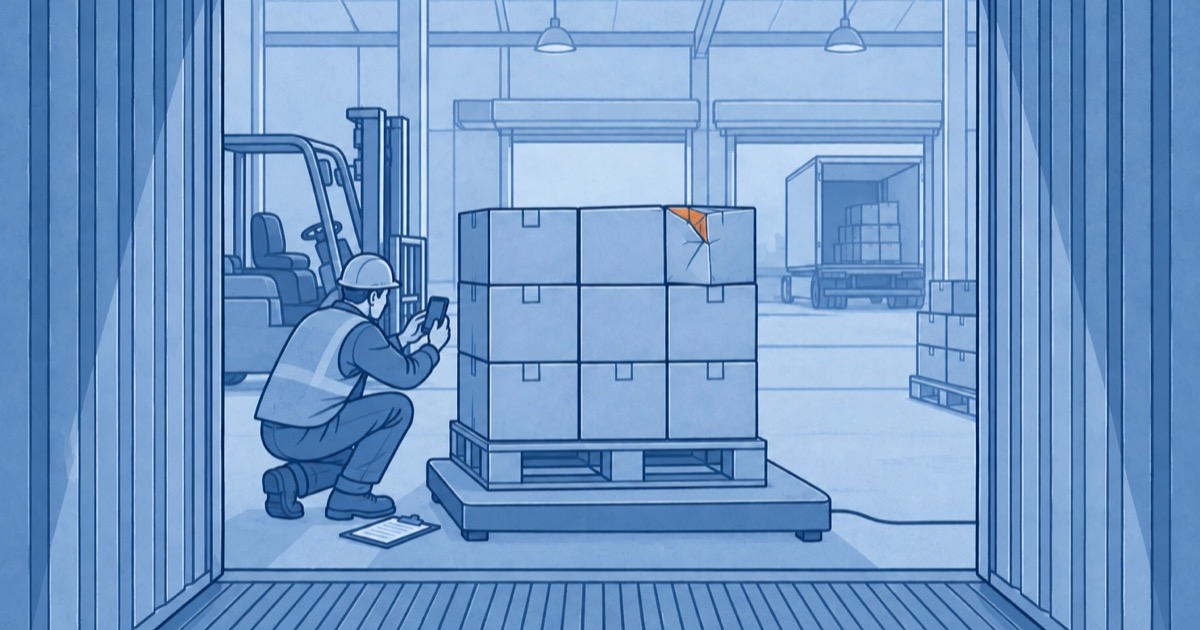
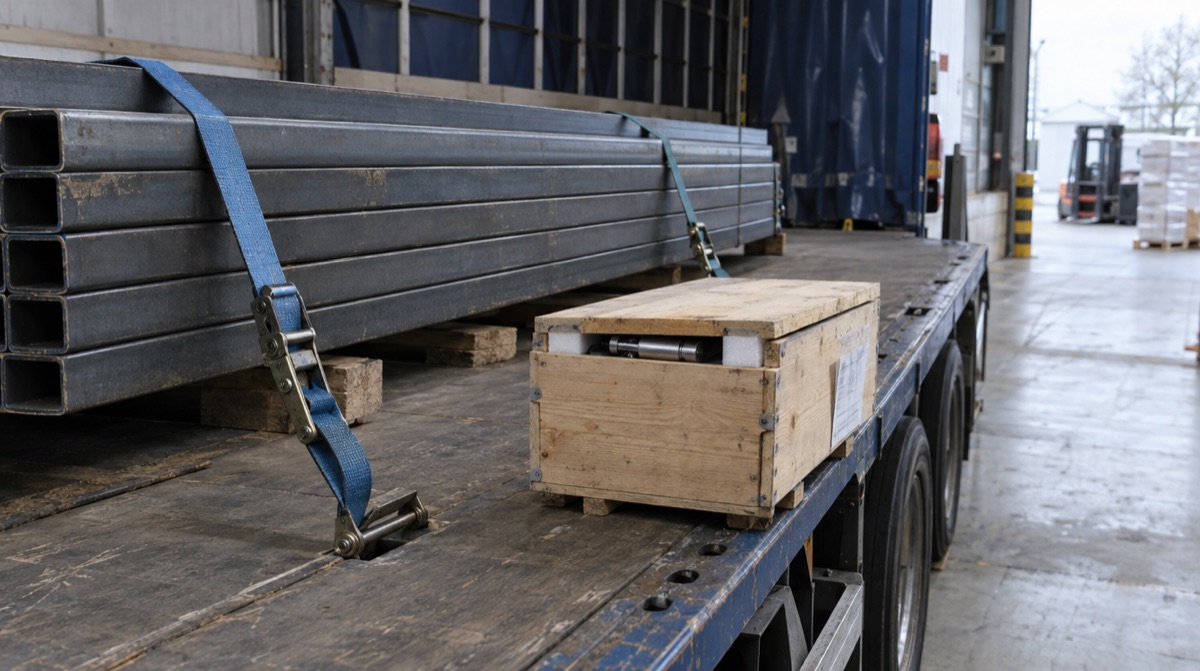
Two consignments leave on the same truck. One is four tonnes of steel section worth eighteen thousand euros. The other is a two hundred kilogram crate of measuring instruments worth thirty thousand. Both are damaged in the same incident, by the same driver, in the same way.
The steel is fully recoverable. The instruments recover about four per cent. Nobody was more at fault in one case than the other.
In short
- Carrier liability for road freight is capped by weight, not by value. For international road carriage under the CMR Convention the cap is 8.33 Special Drawing Rights per kilogram of gross weight. US domestic freight starts at actual loss under the Carmack Amendment, but carriers limit it through released value in their tariffs.
- Divide a product's value by its shipped weight. Where that is far above the cap, the cap rather than fault decides most claims.
- There are two ways past the cap: conduct (wilful misconduct under CMR Article 29), or, in the US, showing that the limitation was never validly agreed.
- Both routes depend on evidence of condition and loading at handover, captured before the goods leave.
Your claim is capped by the kilogram
There are two answers. Which one governs your claim depends on where the truck goes.
International road carriage in Europe is capped by treaty. The CMR Convention's 1978 Protocol replaced the original gold franc figure with a plain one: compensation shall not exceed 8.33 units of account per kilogram of gross weight short, the unit of account being the Special Drawing Right as defined by the International Monetary Fund (Protocol to the CMR Convention, Geneva, 5 July 1978, United Nations Treaty Series vol. 1208, read 9 September 2026).
Read the unit carefully, because everything else follows from it. The cap is counted on the gross weight of what was lost or damaged, so a light box of expensive parts gets a small ceiling whatever it cost.
Domestic carriage in the United States has no statutory cap. The Carmack Amendment makes a carrier liable for the actual loss or injury to the property it carries (49 U.S.C. § 14706(a), read 9 September 2026). Full value is the starting point. Any limit comes from your own paperwork, because § 14706(c) lets a carrier limit its liability by written agreement with the shipper. LTL carriers do this as a matter of course through released value provisions in their tariffs, usually set by commodity classification and expressed per pound.
The mechanisms differ, but the effect on your claim is the same: a ceiling that has nothing to do with what the goods are worth.
Work the two examples on the CMR figure. Four tonnes of steel gives a ceiling of 33,320 units of account, more than the eighteen thousand euros the steel was worth, so fault and the cost of the damage decide the outcome in the ordinary way. Two hundred kilograms of instruments gives 1,666 against a thirty thousand euro loss, and unless the limit is set aside, that figure caps whatever a win on fault can recover.
The US version of the same sum uses whatever released value applies to your commodity in the carrier's tariff rather than a single treaty number. The arithmetic is identical and so is the conclusion.
This is why experienced claims people ask the weight before they ask what happened, and why a manufacturer of dense heavy goods and a manufacturer of light valuable ones live in completely different worlds while using the same word for the same process.
| International road (CMR) | US domestic (Carmack) | |
|---|---|---|
| Starting point | Liability for loss or damage, capped by treaty | Actual loss or injury, 49 U.S.C. § 14706(a) |
| Ceiling | 8.33 SDR per kg of gross weight, Article 23 | Released value in the carrier's tariff, agreed under § 14706(c) |
| Way past the ceiling | Wilful misconduct or equivalent default, Article 29 | The limitation was not validly agreed |
The density line
The practical consequence is a threshold. You can calculate it for your own products in about ten minutes.
Take any product and divide its value by its gross shipped weight. Compare that against the ceiling for the lane, which is the SDR cap converted to your currency for international road carriage, or the released value in the tariff for US domestic freight. If the result is well under the ceiling, ordinary carrier liability covers you and standard claims handling is worth the effort. If the result is far above it, the ceiling will decide most claims regardless of merit, and pursuing them on ordinary grounds is largely wasted work.
Sort your range that way once. Most manufacturers find a clear split. It rarely follows the product lines they think in. Cable drums and fittings sit on one side. Instruments, control units, aerospace components, finished electronics and anything in a light protective case sit on the other. Packaging matters too, since the weight is gross rather than net, which is one of the few situations where heavier packaging improves your legal position.
For everything above the line, the ordinary claim is not the route. Two routes remain, and they differ by system.
How a claim gets above the liability cap
Under CMR the route is conduct. Article 29 says the carrier may not rely on the provisions of the chapter that exclude or limit liability, or that shift the burden of proof, where the damage was caused by his wilful misconduct or by such default as the law of the court seized of the case treats as equivalent to it (CMR Convention, Article 29, read 9 September 2026).
The threshold is high on purpose. Ordinary carelessness does not reach it. A driver who brakes hard and shifts a load has not met it. What can meet it is conduct that shows disregard for a risk that was obvious.
In the United States there is a second and often easier route, because the limitation is contractual rather than statutory and contracts can fail. Federal courts have long applied a four-part enquiry to whether a carrier's limitation binds the shipper at all. The carrier must maintain a tariff within the prescribed guidelines, give the shipper a reasonable opportunity to choose between two or more levels of liability, obtain the shipper's agreement as to its choice, and issue a receipt or bill of lading before moving the shipment (Hughes v. United Van Lines, Inc., 829 F.2d 1407 (7th Cir. 1987), applying Anton v. Greyhound Van Lines, Inc., 591 F.2d 103 (1st Cir. 1978), read 9 September 2026).
One caution on that first element. It was written while the Interstate Commerce Commission still existed, and the ICC was abolished in 1995. Read it today as the carrier's compliance with the written agreement requirement in § 14706(c), and check current authority in your circuit before building a claim on it.
That moves the claim away from the damage itself, which is usually agreed, and onto how the goods were handled: what was done to them, by whom, and whether anyone could have thought it was acceptable.
That is an evidential question, and it is decided almost entirely by what can be shown about the condition and the securing of the load at the points where custody changed.
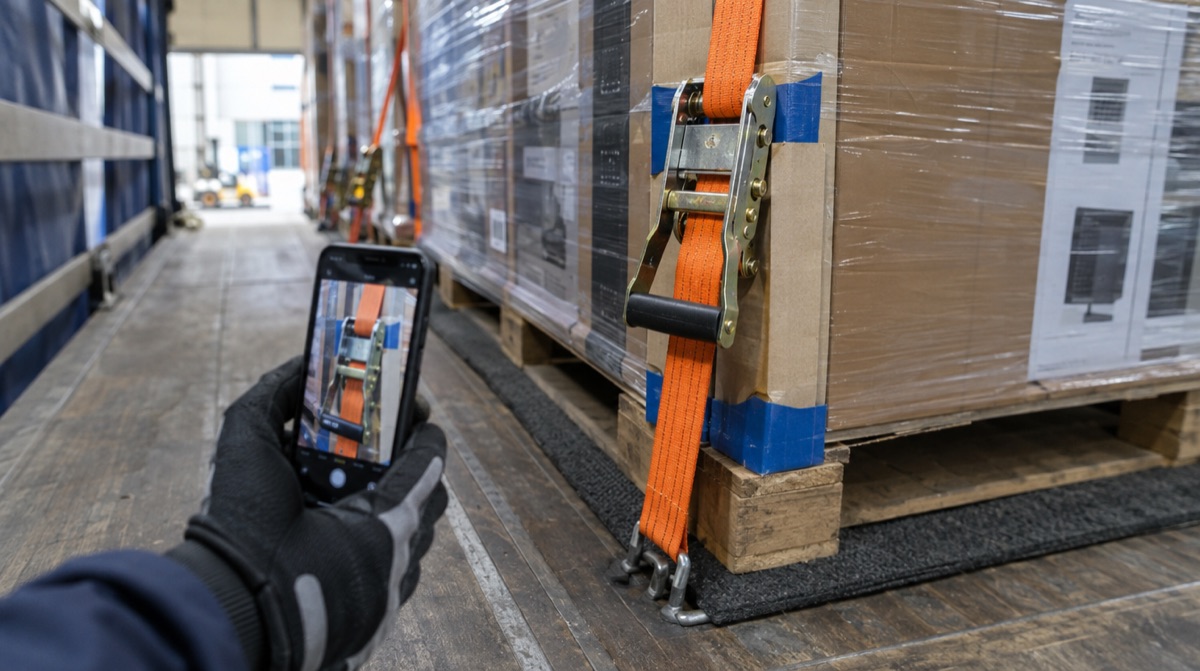
Two things carry the weight here. The state of the goods and their securing at dispatch, because if the load left correctly built and correctly secured, whatever happened to it happened in someone else's care and the range of explanations narrows sharply. And the state on arrival before anything is moved, because a load photographed as it presents at the doors will often show the mechanism. Freight that has slid forward, straps that are slack or absent, a pallet that has been restacked by someone, a unit that has been turned. Those are the observations that support an argument about conduct rather than misfortune.
Without both, the claim is an assertion that something must have gone badly wrong, which is exactly the argument the cap exists to shut down.
Sort outbound loads by what a claim would cost
Dispatch photos earn more on some loads than on others. On light, expensive goods the weight-based limit may cover only a few per cent of what was lost, which leaves a large sum you can only argue for if you can show the load's condition at handover. That evidence is hard to rebuild later, so it is worth making while the truck is still at the dock.
That reframes the cost calculation. Photographing every outbound load looks expensive when the benefit is described as faster claims handling. It looks different when a single consignment above the density line is the difference between recovering 1,600 units of account and recovering thirty thousand euros.
It also changes which loads matter. If you cannot photograph everything, photograph what sits above the line. Sorting by claim exposure rather than by volume is more useful than any general policy, and it is a decision you can make from a spreadsheet you already have.
Where the record has to be
The claim does not arrive at dispatch. It arrives weeks later quoting a consignment number, and by then the argument about conduct has to be assembled from whatever was captured at the time.
The requirement is that any image is retrievable by the identifier the claim quotes, by someone who was not present, without a lookup in another system. Photographs in dated folders on a shared drive satisfy none of that, which is why teams who have been photographing loads for years still lose claims to the cap.
Many claims are lost long before they arrive, at the moment a photo is saved with nothing to say which truck it shows. Blimp does the filing at that moment instead. The shipment reference is scanned on the dock and the photos taken next are attached to it, along with who took them and when, so weeks later the number in the claim is all anyone needs to find the photo report and send it to a carrier or insurer as a link or a PDF. Capture runs on a shared device with PIN access and works offline, syncing when the device finds signal.
When a claim lands, someone still has to work out the exposure, check the weights and values, and decide whether the facts support an Article 29 argument at all. Blimp does none of that work, and it does not track claims or connect to a claims management system. What it does is hold the condition record for the load, filed against the consignment number, so the person making those decisions has one piece of evidence they can trust and send on.
Better photographs never change the per-kilogram figure itself. What they can do is make an Article 29 argument, or in the US a challenge to the limitation, available where the facts support it, and where the facts don't, the cap stands.
The part that argues against the obvious pitch
Most freight damage is ordinary: loads shift, forklifts clip pallets, weather gets in. Very little of it involves conduct that meets the Article 29 threshold, so on most claims the cap will apply and you will recover a fraction.
So if the promise you want is that photographing loads makes freight claims recoverable, that is not true. What it does is ensure that on the small number of claims where the handling really was indefensible, you can show it, and that on the ordinary ones you settle quickly at the capped figure instead of spending three months arriving at the same number.
Some of your own photos will work against you. Photograph every load leaving the dock and sooner or later one will show a pallet you could not defend in a claim. The carrier's lawyer would have found it anyway, so you see it earlier and in private, while there is still time to change how that dock loads.
Frequently asked questions
What is the maximum a carrier is liable for?
For international road carriage under CMR, 8.33 units of account per kilogram of gross weight short, the unit being the IMF Special Drawing Right. For US domestic freight there is no statutory cap. Liability starts at actual loss under Carmack and is narrowed by whatever released value your carrier's tariff applies to the commodity. Both ceilings operate regardless of what the goods are worth.
How do I know whether the cap will affect my claim?
Divide the value of the consignment by its gross weight in kilograms and compare it with the converted cap. Where value per kilogram sits well below the cap you are unlikely to be constrained by it. Where it sits far above, the cap will determine the outcome unless you can argue past it.
Can the liability cap be broken?
Yes, by two different routes. Under CMR Article 29 the limits fall away where the damage was caused by wilful misconduct or equivalent default, and the threshold is deliberately high. In the United States the limitation is contractual, so it can also be attacked on its own terms where the carrier did not offer a real choice of liability levels or did not issue a bill of lading before moving the freight. The first route needs evidence about how the goods were handled. The second needs your paperwork.
What evidence supports a claim beyond the cap?
The state of the goods and their securing at dispatch, and their state on arrival before anything is moved. Together those establish what changed while the goods were in the carrier's custody, which is the only basis for an argument about conduct.
Does the carrier's own delivery photograph count as proof?
It records arrival, which is one end of the custody window and useful as far as it goes. It says nothing about the state of the goods when they were collected, so on its own it cannot establish where damage occurred.
One calculation for this afternoon
Take your five highest value products and divide invoice value by gross shipped weight.
Anything sitting far above the cap is a product where the current claims process cannot work, and no amount of diligence in handling the paperwork will change that.